
Teaching letters and colors to preschool children is fundamental to building their future academic and cognitive skills. Modern educational studies indicate that the first three years are the most influential in brain development and the acquisition of language and cognitive skills. Therefore, teachers are constantly seeking innovative teaching methods that make the learning process both enjoyable and effective.
One such proven method is the use of crocheted dolls. They are not only used for play, but can also be a powerful educational tool that helps children learn letters and colors through touch, sight, and physical interaction. In this article, we will explore in detail the importance of teaching letters and colors to children and how to incorporate crocheted dolls into classrooms through practical tips supported by scientific references.
First: The importance of teaching letters and colors to children:
1- Building early reading and writing skills:
Learning the alphabet is a fundamental step in developing reading and writing skills. A study by Piasta & Wagner (2010 ) found that children who participate in interactive letter-learning activities show faster progress in word recognition and sentence formation.
2 - Enhancing visual and cognitive understanding:
Knowing colors not only helps in recognizing objects, but also enhances a child's cognitive abilities. It enables them to distinguish between elements, classify, and understand relationships between things—skills essential for logical thinking.
3 - Supporting social and emotional growth:
Group learning activities encourage cooperation and communication with others. Learning through play also reduces stress and increases a child's self-confidence.
Second: Why are crocheted dolls considered an effective tool in education?
- Safe and child-friendly: Made from soft yarns and free of harmful substances, making it suitable for children of different ages.
- Various shapes and colors: They can be designed in the form of letters or story characters in attractive colors.
- Sensory stimulation: It combines sensory, visual and linguistic learning at the same time, increasing the speed of information absorption.
- Flexibility in use: It can be used in individual or group activities, in the classroom or at home.
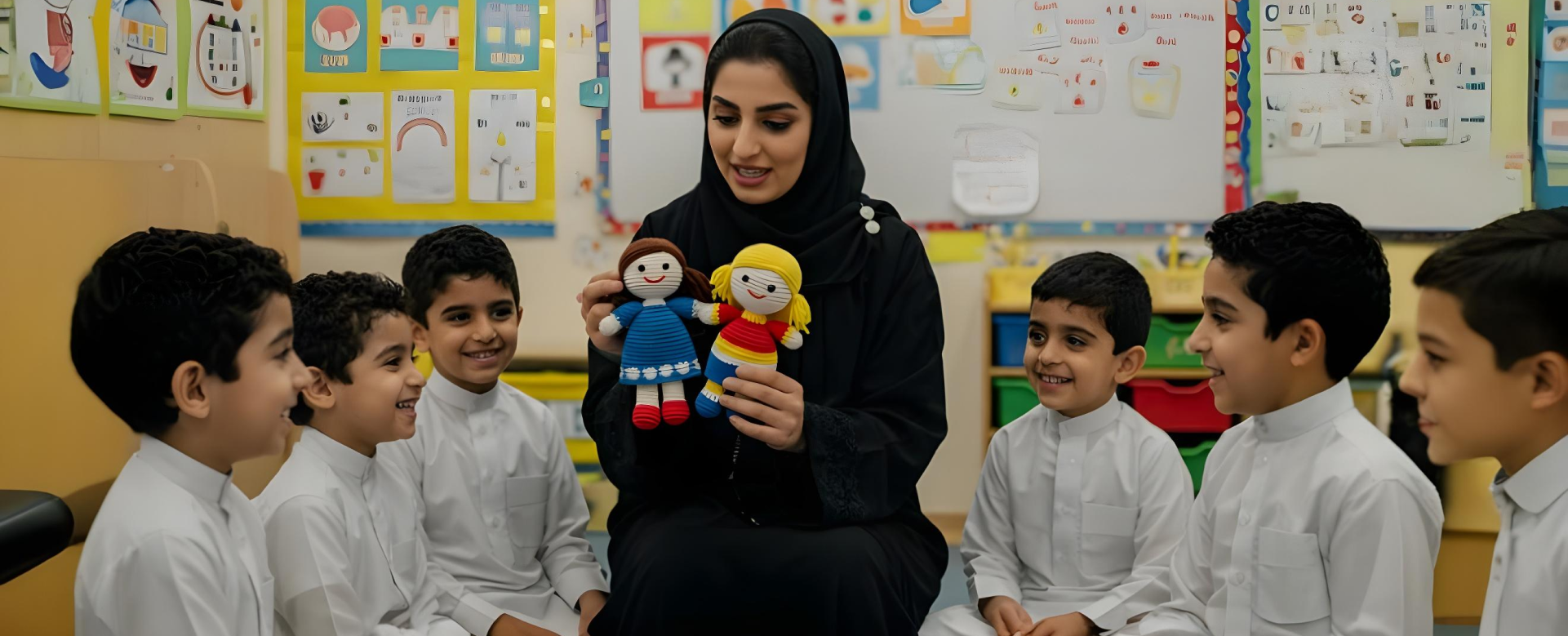 Third: Tips for teachers on using crochet dolls to teach children letters and colors:
1 - Employing educational stories. Stories are one of the scientifically proven methods to attract children's attention and reinforce information.
- Create a doll for each letter and link it to a short story (for example: The letter B loves ducks).
- Using a small puppet theater allows the child to see the letters move and speak, which enhances visual and auditory memory.
- Each story can be linked to a specific color to promote dual learning of letters and colors.
2 - Organizing interactive activities:
Active learning encourages the child to participate and increases their ability to concentrate:
- Letter Search Game: The teacher hides dolls representing letters and asks the children to find the required letter.
- Alphabet Ordering Game: Children participate in correctly arranging alphabet dolls on a board or table.
- Color matching: The teacher presents real objects (a red apple, a yellow banana) and asks the child to match them with dolls of the same color.
3 - Using sensory and auditory activities:
Activities that integrate different senses help to enhance learning:
- Touch the dolls while saying the letter name aloud.
- Use alphabet songs or chants with puppet animation.
- Recognizing letters and colors through touch alone, without looking at them, develops sensory discrimination skills.
4 - Linking lessons to daily life:
- Using puppets to illustrate letters and colors found in the surrounding environment, such as a garden or classroom.
- Encouraging children to carry dolls that represent the first letter of their name, thus linking education to their personal identity.
- Integrate the puppets into everyday activities such as mealtimes or free play to increase the natural repetition of letters and colors.
5 - Repetition and positive reinforcement:
Repetition helps to solidify information in a child's memory, and becomes more effective with continuous encouragement:
- Reuse the dolls in more than one activity each day in different ways to avoid boredom.
- Give the child stickers or words of praise when they successfully recognize a letter or color.
- Allowing the child to participate in making a simple doll increases their connection to learning.
6 - Introducing innovative teaching strategies:
- Learning through adventure: Organizing an activity similar to an expedition to search for dolls that represent letters or colors hidden in the classroom.
- Learning through music: Singing alphabet and color songs while moving puppets to facilitate memorization.
- Imaginative play: Allowing children to role-play different roles using puppets (teacher, craft, color) which develops creative thinking skills
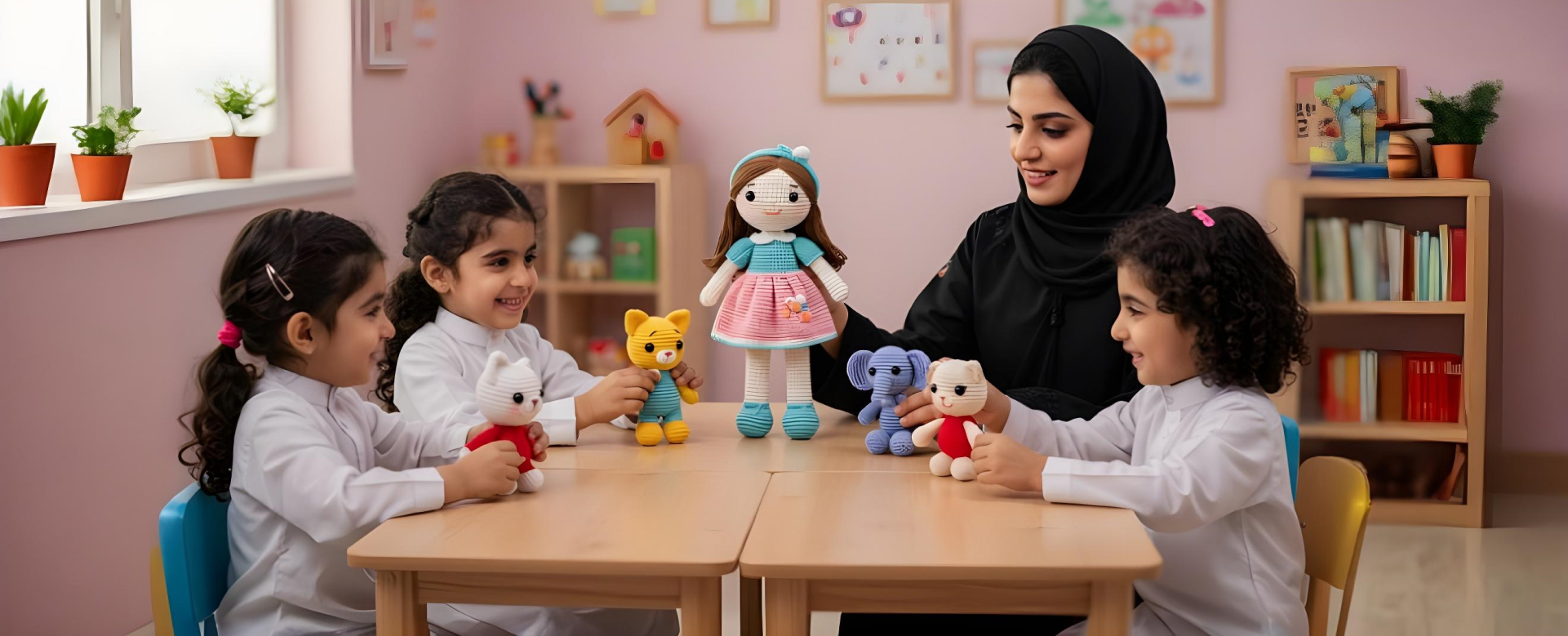
Fourth: The benefits of this teaching method:
- Enhancing interaction and fun within the classroom.
- Supporting speech and language skills through auditory and visual repetition.
- Increase the child's ability to concentrate and pay attention.
- Making the process of teaching children letters and colors a fun and emotional experience.
- Contributing to the development of social skills and cooperation with peers
Fifth: Recommendations for female teachers:
- Using dolls of varying sizes and colors to suit different ages.
- Combining individual and group activities to satisfy all learning styles.
- Measure the child's progress through daily observations or fun assessment activities.
- Collaborate with parents to implement the same strategies at home.
Summary:
Teaching children letters and colors is no longer a traditional process using books and papers; it now relies on innovative teaching methods such as crocheted dolls that blend fun with learning. By following the previously mentioned tips of using interactive stories, sensory activities, and positive repetition, teachers can create a stimulating learning environment that helps children build a strong foundation in reading and writing and develop their social and creative skills.